Scientific Research
Scientific Research Projects Link to heading
Pressure variation in Earth’s heterogeneous rocks Link to heading
Pressure in a rock element in Earth’s lithosphere may vary from its ambient value and if significant, may influence the physical processes. This poses major problems in routine use of pressure as a proxy for depth in geodynamic models. Ankit developed and applied physics-based numerical models to simulate pressure deviation in a rheologically distinct rock element in an ambient rock medium of a non-linear viscous anisotropic rheology.
Investigations in this project revealed that the pressure deviations in a rock element are in the same order as the deviatoric stress levels and hence limited by the strength of rocks. Following figure shows one such example of pressure fields around a heterogeneous element with a different viscosity than the surrounding rocks. The pressure values are normalized with respect to far field stresses.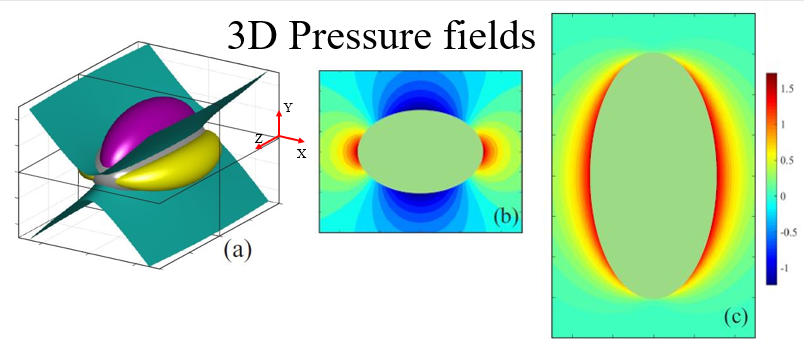
For more info, refer to our publication here
Code: https://github.com/ankibues/MOPLA_Application_Matlab/tree/master/Pressure%20Investigation
Quartz crystal fabrics in Earth’s multiscale lithosphere Link to heading
Flow variation in quartz aggregates of natural high strain zones in Earth’s lithosphere can influence the development of crystallographic fabric and cause problems in its interpretation. If such effect is not accounted for, crucial geological information such as deformation temperature, deformation history and shear sense obtained using crystallographic fabric can be seriously misinterpreted. Ankit developed and applied a multiscale model coupling Matlab-based MOPLA code with the Fortran-based VPSC code to simulate the quartz crystallographic fabric under partitioned flow. It was found that the quartz c-axis fabric variation showing apparent opposite senses of shear within a single thin section, can be explained by partitioned flow within the quartz domains and reflect finite strain gradient rather than reversal of vorticity sense as previously thought. Following image shows the quartz crystal fabric changing with increase in strain intensity. This only happens when quartz aggregates are rheologically stronger than the surrounding rockmass.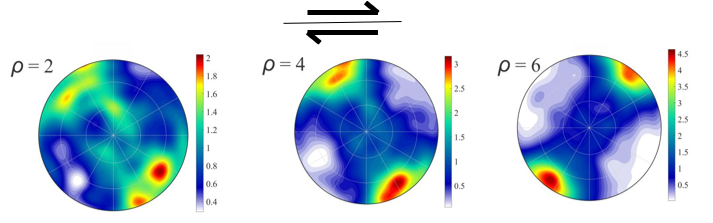
For more info, refer to our publication here
Code: https://github.com/ankibues/MOPLA_Application_Matlab/tree/master/MOPLA_coupling_VPSC
Flanking structures in Earth’s lithosphere Link to heading
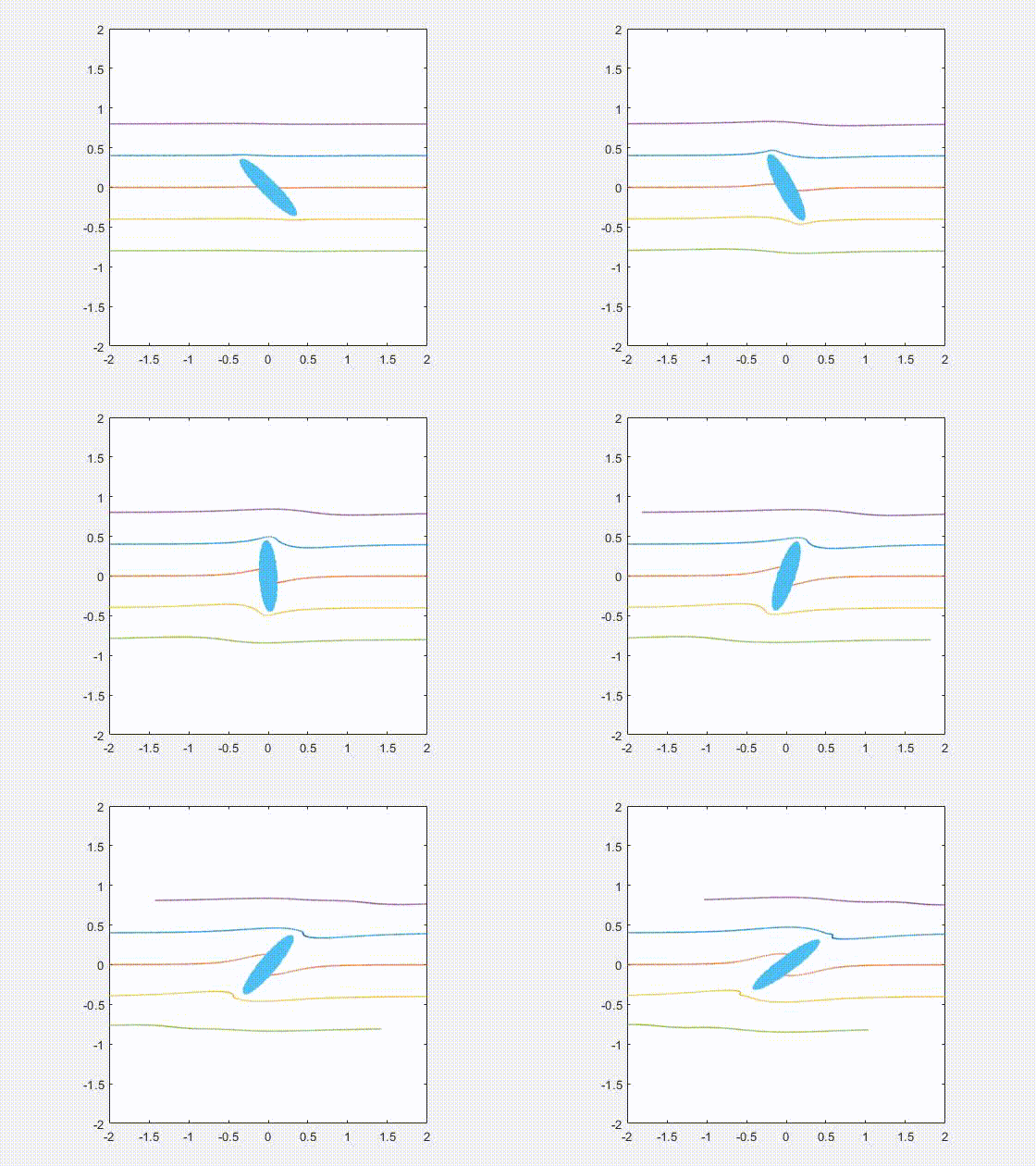
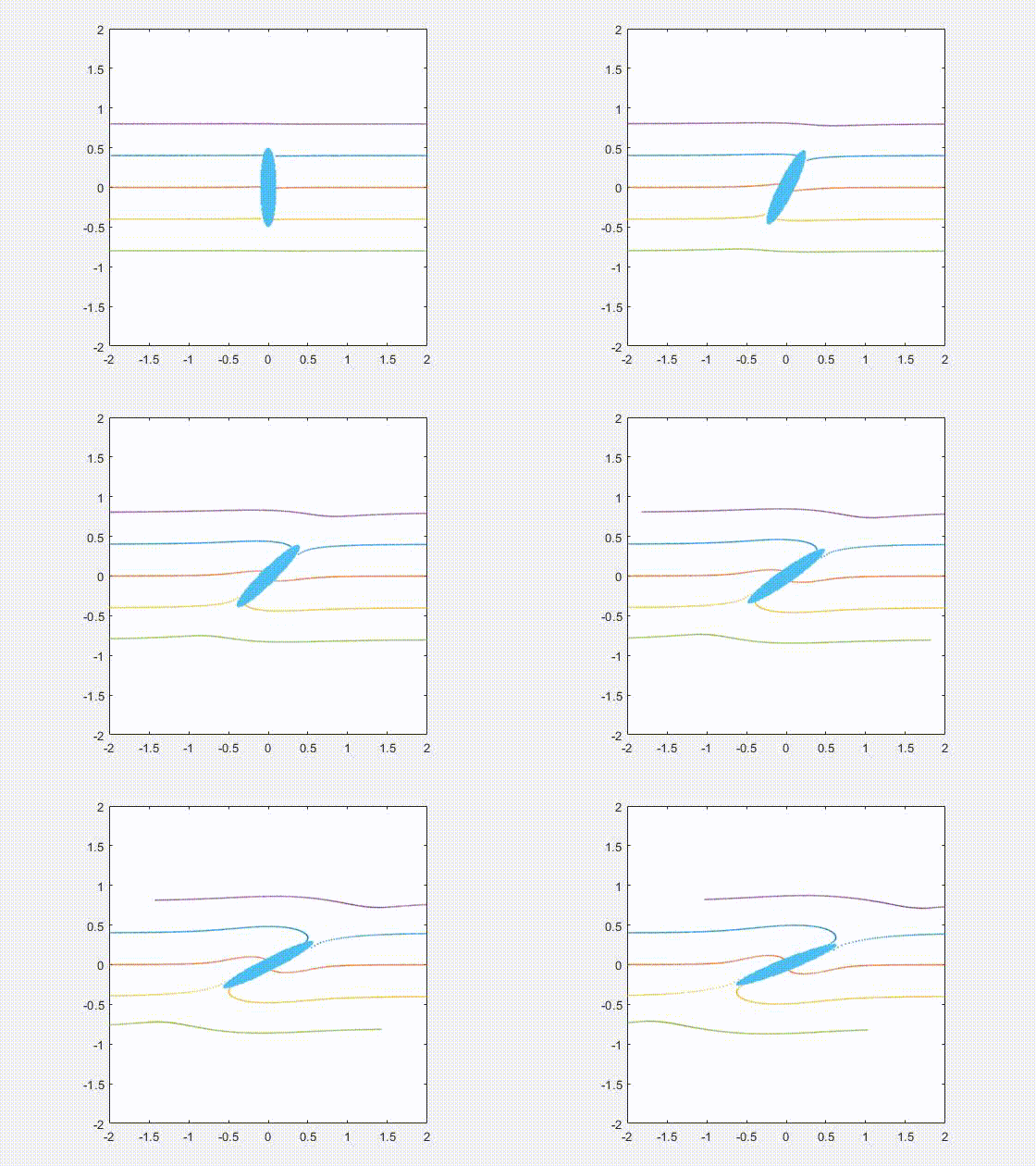
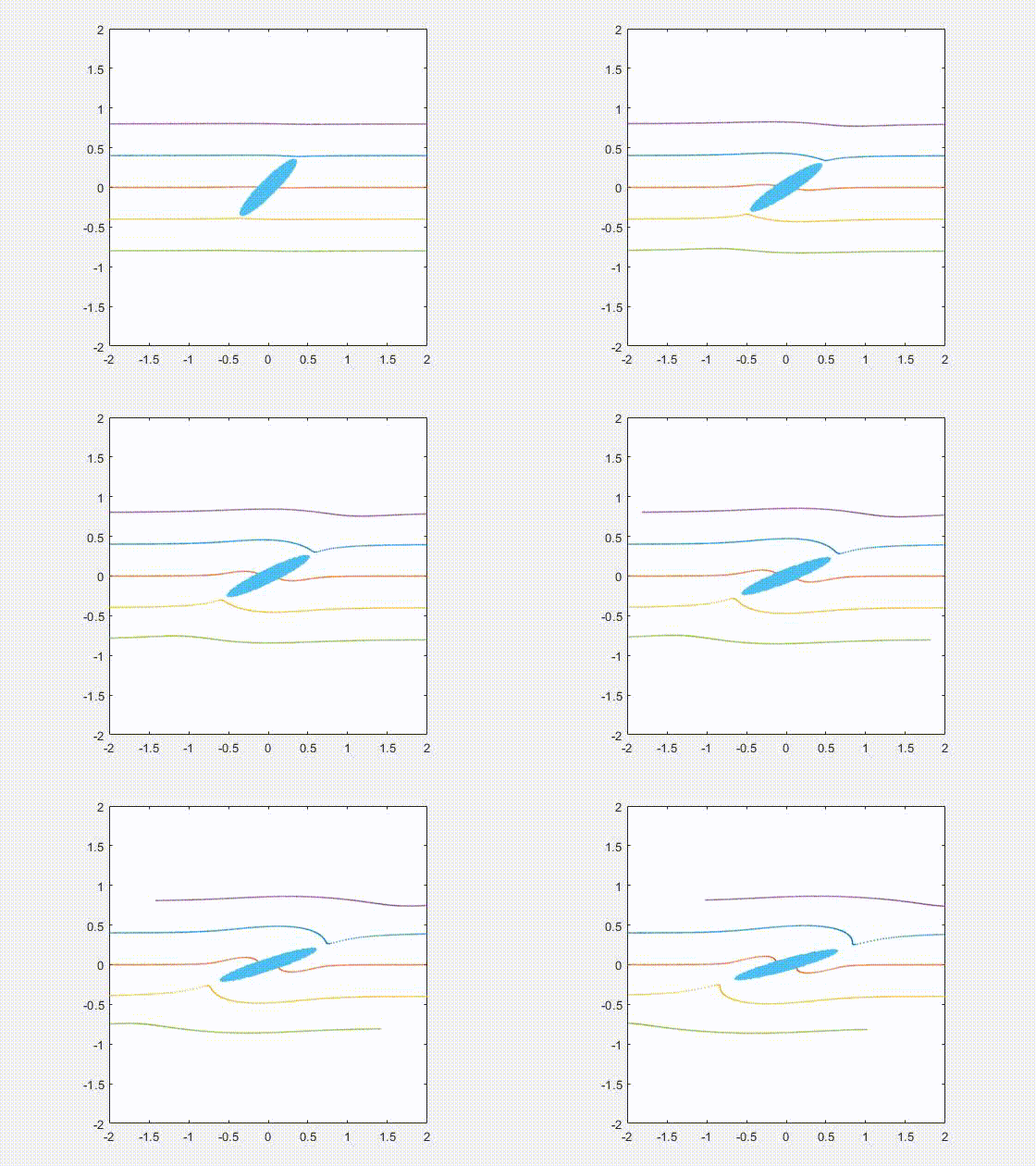
Flow variation around a rheological heterogeneity (also known as a cutting element) such as a dyke, can form flanking structures, which if interpreted incorrectly, can cause problems in understanding regional plate tectonics. This project developed a new model to simulate 3-D flanking structures and demonstrate how flanking structures vary with viscosity, 3-D shape and orientation of cutting element, and finite strains. The following example simulations shows the how different flanking structure might develop around a rock element depending upon its intial orientation.
| Flanking Structure 1 | Flanking Structure 2 | Flanking Structure 3 |
|---|---|---|
 |  |  |
For more info, refer to this thesis here
Code: https://github.com/ankibues/MOPLA_Application_Matlab/tree/master/Flanking%20Structure%20Investigation/Matlab%20files